



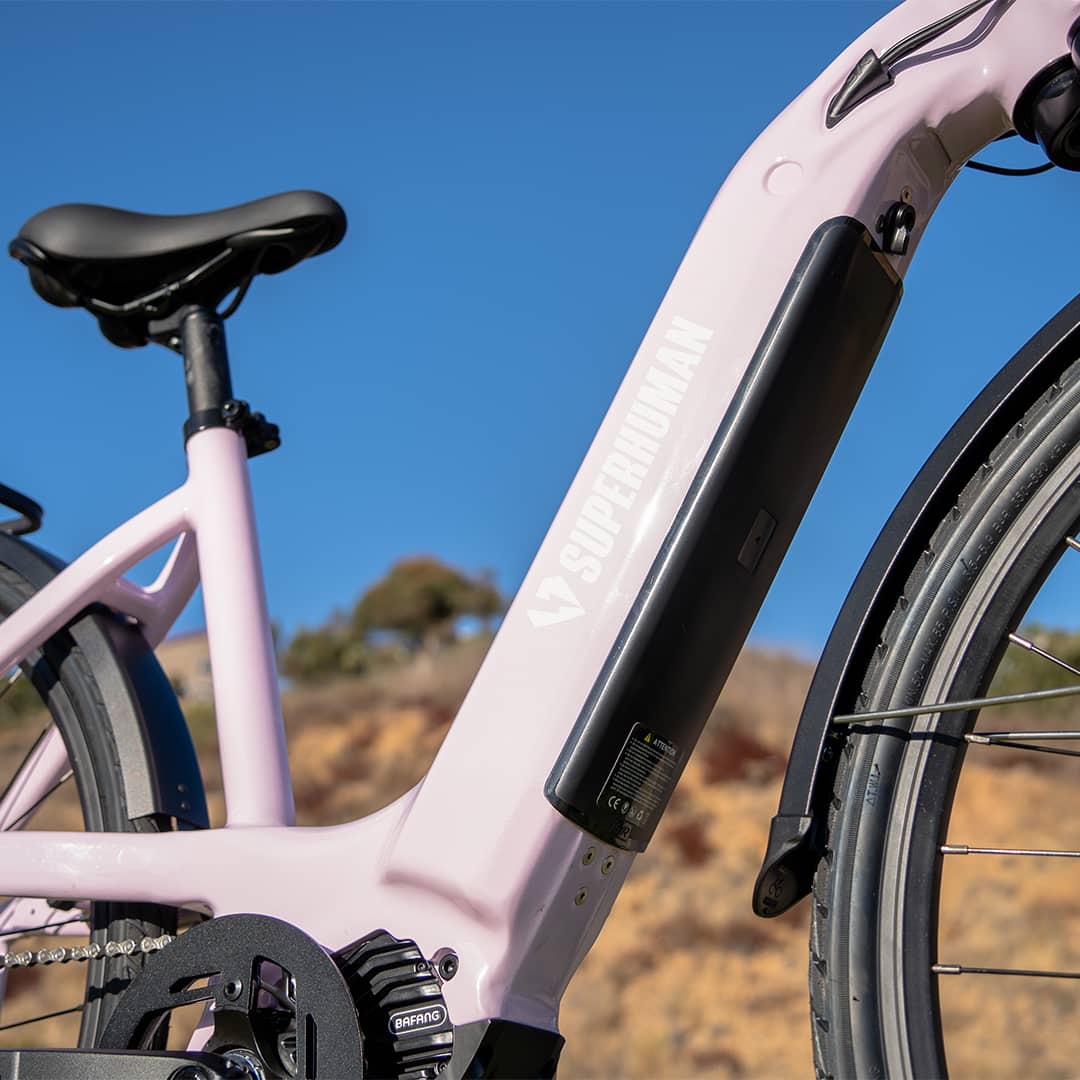
Step-Through vs. Standard Frame E-Bikes: Which Fits You Best? (2026 Guide)
Quick answer: A step-through frame has a low or absent top tube, so you mount by stepping through rather than swinging a leg over — easier for frequent stops, cargo, or riders with limited hip/knee mobility. A standard frame is stiffer and slightly lighter for the same build, which matters more on hills or longer rides. Most riders should pick based on how they'll actually get on and off the bike, not on "men's" vs. "women's" bike myths — that distinction is outdated. At Superhuman Bikes, the Moonrider is our step-through model; Babymaker II Pro, Photon, Bomber, F5 Trail, Blade 2.0, and Weapon use standard frames.
Why frame type matters more than most riders think
Frame size and battery range get most of the attention when people shop for an e-bike, but frame type is what determines whether you'll actually enjoy getting on and off the thing every single day. If you're locking up outside a coffee shop, hopping on with a backpack, or riding in normal clothes rather than gear, a standard frame's high top tube can turn a quick stop into an awkward production — every time.
This isn't a "men's bike vs. women's bike" question anymore. That distinction is a holdover from when standard frames were built for skirts to clear the top tube. Today, step-through frames are just a practical mounting style, and plenty of riders — regardless of height, build, or gender — prefer them for the same reason people prefer automatic transmissions: less friction between you and riding.
Step-through vs. standard frame: the real differences
| Step-through | Standard | |
|---|---|---|
| Mounting | Step through the low frame, no leg swing | Swing leg over the top tube |
| Best for | Frequent stops, cargo/errands, limited hip or knee mobility, riding in regular clothes | Longer rides, hills, riders who want maximum frame stiffness |
| Stiffness | Slightly less rigid (open frame design) | Stiffer under hard pedaling or climbing |
| Typical weight | Comparable, sometimes marginally heavier for the same components | Comparable, sometimes marginally lighter |
| Who tends to prefer it | Commuters, riders new to e-bikes, anyone mounting/dismounting often | Riders prioritizing performance feel or off-road capability |
Neither is objectively "better" — the right one depends on how you actually ride, not on any inherent performance gap. Superhuman's <a href="https://superhumanbikes.com/blogs/news/production-update-19-inches">own guidance</a> for riders new to e-bikes points to a step-through model for exactly this reason: less to think about, more comfortable to just get on and go.
The standover test: how to check fit before you buy
Because most e-bikes — Superhuman's lineup included — use one frame size engineered to fit a range of heights via an adjustable seatpost and handlebar, the real fit question isn't "what size" but "does this frame clear your body correctly." Here's the standard test:
- Stand over the frame with both feet flat on the ground, straddling the top tube (or where the top tube would be, on a step-through).
- Check the clearance between your body and the frame. For a city or commuter e-bike, aim for 1–2 inches of clearance. For a bike you'll ride off-road or stand up on frequently, a bit more clearance is safer.
- Sit and check saddle height separately — standover clearance and saddle height are two different adjustments, and getting standover right doesn't mean the saddle is dialed in yet.
If you're between sizes or unsure, Superhuman Bikes' support team can walk through frame geometry for your specific height before you order — always better than guessing and dealing with a return.
Which Superhuman e-bike fits your frame preference
| Model | Frame type | Notable fit feature |
|---|---|---|
| Moonrider | Step-through | 16.5" standover height, adjustable handlebars, designed to fit a wide range of rider heights |
| Babymaker II Pro | Standard | Lightest frame in the lineup at 33 lbs — easier to maneuver on and off even with a standard top tube |
| Babymaker II Classic | Standard | Same minimalist frame as the Pro, 33 lbs |
| Photon | Standard | Lightweight frame, glow-in-the-dark finish option |
| Bomber | Standard | Wider stance for stability, fat-tire scrambler build |
| F5 Trail | Standard | Hardtail mountain geometry, built for standing climbs |
| Blade 2.0 | Standard | Performance-oriented frame |
| Weapon | Standard | Performance frame, highest-capacity battery in the lineup |
For a full breakdown of how much each model weighs off the showroom floor, see our Weight Guide by Model.
Frequently asked questions
Is a step-through frame weaker than a standard frame? Not meaningfully for everyday riding. Step-through frames are engineered to handle normal commuting and errand loads without issue. The stiffness difference only becomes noticeable under hard, out-of-the-saddle climbing efforts.
Can taller or heavier riders use a step-through e-bike? Yes. Frame type doesn't determine weight capacity — that's set by the motor, battery, and component ratings. Check the specific model's rated weight capacity separately from choosing step-through vs. standard.
Are step-through frames only for women? No. That's an outdated convention. Step-through frames are chosen today based on how someone mounts and dismounts the bike, not gender.
Which Superhuman e-bike is best for someone new to e-bikes? The Moonrider or Photon are the easiest starting points — the Moonrider's step-through frame in particular removes one more thing to think about while you're getting used to pedal assist.
How do I know if an e-bike frame will fit me before I order? Use the standover test above, and check the model's published standover height and seat range against your inseam. If you're unsure, contact Superhuman support for a fit recommendation before ordering.
Share:
Best E-Bike for Beach Riding in San Diego (2026 Guide)
How to Charge Your E-Bike Battery the Right Way (2026 Guide)