



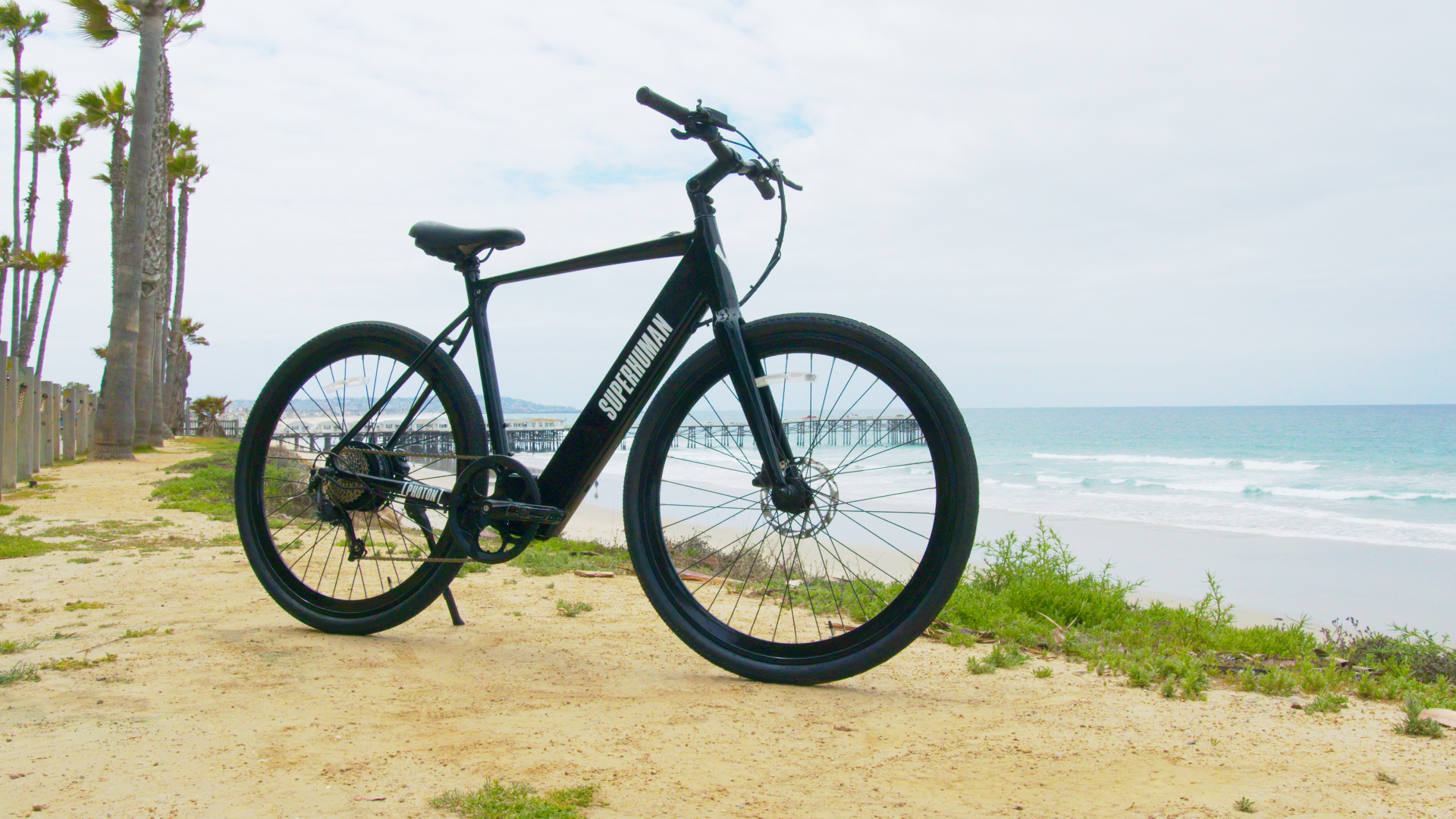
San Diego has a reputation as a flat, sunny beach city. That reputation does not survive your first ride home from Ocean Beach to Point Loma, or your first commute from North Park up to Kensington, or your first attempt to pedal out of Mission Hills on a regular bike without stopping to catch your breath.
The reality: San Diego is built on a series of coastal mesas connected by canyons and ravines, and the streets that bridge them can hit 15–25% grades. Laurel Street between State and Union in Bankers Hill? 22.5%. Torrance Street in Mission Hills? 26%. The Country Club route up Mt. Soledad averages 11% for nearly a mile. And Spring Valley's steepest streets push past 30%.
If you're riding an e-bike here, you need one that was actually built for this — not just a bike that sounds powerful on a spec sheet and bogs out halfway up Juan Street.
Here's what to actually look for, and which Superhuman bikes handle San Diego's terrain best.
What Actually Matters on a Hill (It's Not Just Wattage)
Most people shopping for a hill-climbing e-bike fixate on motor wattage. That's understandable, but it's the wrong thing to optimize for — especially in San Diego, where the climbs tend to be short, steep, and punchy rather than long and gradual.
What actually moves you up a hill is torque — the rotational force that turns the wheel against gravity. Two bikes can have the same wattage rating and perform completely differently on a steep climb, depending on how that power gets delivered.
The other thing that matters: motor placement and type. Mid-drive motors sit at the cranks and work through the bike's gears, multiplying torque as the gradient steepens. Hub motors sit in the wheel and deliver raw power directly. Both can climb, but mid-drives tend to feel smoother and more efficient on the kind of sustained, steep grades San Diego is famous for.
Here's what the research shows matters most for steep hill performance:
-
Torque (Nm): Aim for 50Nm minimum for moderate hills; 70Nm+ for anything above 12% grade with any regularity.
-
Motor type: Mid-drive wins on long, steep climbs. High-wattage hub motors (750W+) can handle shorter punchy climbs well.
-
Battery size: Climbing drains your battery significantly faster than flat riding. If your commute is hilly, bigger is better — 500Wh at minimum; 700Wh+ if you're doing serious elevation regularly.
-
Top-speed assist: More doesn't always mean better on hills. What you want is strong assist at low speed — the point where you're grinding up a 20% grade at 8 mph and need the motor to actually be working for you, not kicking in and out.
The San Diego Reality: Neighborhoods That Separate Good from Great
Not every hill in San Diego is the same kind of problem. Here's how to match the terrain to what you need:
The Canyon Crossers (Mission Hills, Hillcrest, Bankers Hill, North Park)
These are the short-but-brutal climbs: steep punchy grades between neighborhoods, often a single block, often 15–25%. You're not grinding for miles — you're hitting a wall, getting over it, and recovering. A high-torque hub motor handles this well. You want instant, powerful assist from a dead stop.
Best fits: Moonrider (750W, 28+ mph), Weapon (1000W, 28+ mph)
The Mesa Climbers (Point Loma, Kensington, La Mesa, La Jolla)
These are longer sustained climbs — often a half mile or more at 8–15% average grade. The Mt. Soledad Country Club route, the Point Loma ridgeline, the roll up from Mission Valley into Linda Vista. These are the rides where an efficient mid-drive setup lets you stay comfortable and conserve battery over distance.
Best fit: F5 Trail (750W mid-drive, 28+ mph) — the 50+ mile range matters here as much as the motor
The Trail and Fire Road Crowd (Miramar, Mission Trails, Los Peñasquitos Canyon)
San Diego has incredible trail access, and for riders who want to mix road commuting with canyon trails on the same bike, traction and suspension matter as much as raw power. Class 1 trail access means most fire roads and multi-use paths are open to you if you stay within the right class.
Best fits: F5 Trail for mixed-surface, Champ Pro Electric Dirt Bike for full off-road
Superhuman Bikes, Matched to San Diego Hills
Moonrider — The City Hill Crusher
750W hub motor | 28+ mph | 50+ miles range | 59 lbs
The Moonrider is the workhorse for San Diego neighborhood riding. The 750W motor gives it the punch to handle the steep single-block climbers in Mission Hills and North Park without drama. The 28+ mph top speed means you're moving efficiently on flat stretches between climbs, and the 50+ mile range handles a hilly daily commute without constant charging anxiety. It's also the most approachable size and weight in the lineup for everyday riding — not a featherweight, but manageable.
Best for: Daily commuters dealing with canyon crossings, Hillcrest/Mission Hills/North Park/South Park riders.
F5 Trail — For Sustained Climbs and Mixed Terrain
750W | 28+ mph | 50+ miles range | 61 lbs
Where the Moonrider is built around punchy urban performance, the F5 Trail is the pick for longer, more sustained efforts — think climbing from Pacific Beach up to Clairemont Mesa, or commuting from Mission Valley up into the neighborhoods east of the 15. The trail geometry and suspension give you confidence on rougher surfaces, and it's the bike in the Superhuman lineup that handles mixed road/trail riding best if you want to route through canyon trails on your commute.
Best for: Riders with longer commutes involving significant elevation, La Mesa, El Cajon, Scripps Ranch, Mission Trails area.
Weapon — When You Just Want Power
1000W | 28+ mph | 70+ miles range | 55 lbs
The Weapon is the most straightforward answer to San Diego's steep streets: more motor, more battery, more bike. The 1000W output and 70+ mile range mean you're not worrying about whether you have enough power or range for the day — you just ride. The best choice if your daily route is consistently hilly or you're covering real distance.
Best for: High-mileage commuters, hilly neighborhoods, riders who want headroom to spare.
Babymaker II Pro — The Flat-to-Moderate Commuter
350W | 25+ mph | 70+ miles range | 33 lbs
Worth mentioning clearly: the Babymaker II Pro's 350W motor makes it excellent for flat-to-rolling terrain and a surprisingly capable commuter on hills — but if your route involves the kind of 20%+ grades San Diego is famous for, the other options in the lineup serve you better. Where it wins is weight (33 lbs is significantly lighter than anything else in the lineup) and range (70+ miles). Great for beach-adjacent neighborhoods with flatter routes.
Best for: Coastal neighborhoods, riders who mostly deal with rolling terrain rather than steep climbs.
A Few Routes Worth Knowing
If you're route planning for a new e-bike in San Diego, here are the climbs that tell you what you're dealing with:
-
Laurel Street (Bankers Hill): 22.5% grade between State and Union. A two-block test of whether your bike has the punch to handle canyon crossings.
-
Juan Street (Old Town to Mission Hills): 0.4 miles at 10% average, which sounds mild until you're doing it. The reference commute for anyone living in Mission Hills.
-
Mt. Soledad (La Jolla): Multiple routes, 8–18% average depending on your line. The benchmark for riders who want to get serious about elevation.
-
Via Capri Drive (La Jolla/Soledad): Sustained climb up to the Soledad peak area. 0.6+ miles, double-digit average grade. This is where battery range on hills starts to matter.
A 750W Superhuman bike handles all of these. A 1000W Weapon handles all of these with room to spare. The Babymaker II Pro handles Juan Street fine; Laurel and Mt. Soledad are where you'll want more motor.
Frequently Asked Questions
What makes an e-bike good for hills? Strong torque delivery at low speed matters more than top-end wattage. Look for 750W+ motors, battery capacity of 500Wh or more, and strong low-speed assist rather than just high top speed.
Is San Diego hilly for e-bikes? More than most people expect. The beach communities (Pacific Beach, Mission Beach, Ocean Beach) are relatively flat. Get a mile inland and you're dealing with the canyon crossings that connect San Diego's mesas — often 15–25% grades. Point Loma, Mission Hills, Hillcrest, Kensington, La Jolla, and El Cerrito are all known for steep streets.
Which Superhuman bike is best for San Diego hills? For most riders, the Moonrider (750W, 28+ mph) or the F5 Trail (750W, 28+ mph, trail geometry) are the strongest all-around picks. The Weapon (1000W, 70+ mile range) is the top-of-lineup choice if you want maximum hill performance and range. The Babymaker II Pro is excellent for flatter coastal neighborhoods.
Do I need to worry about battery range on hilly routes? Yes — climbing drains battery significantly faster than flat riding. If your commute involves real elevation gain, look for bikes with 500Wh+ batteries and budget for the fact that hilly riding will reduce your practical range meaningfully compared to manufacturer range claims (which are usually measured on flat terrain).
Ready to find your hill match? Browse the full Superhuman lineup or check out our mid-drive vs hub motor breakdown to go deeper on motor types before you decide.
Superhuman Bikes is headquartered in San Diego. We ride these hills. All specs sourced from current Superhuman product pages.
Share:
Electric Bike Classes Explained: Class 1, 2, and 3 (2026 Guide)
E-Bike Theft Prevention: The Complete Guide to Protecting Your Investment