



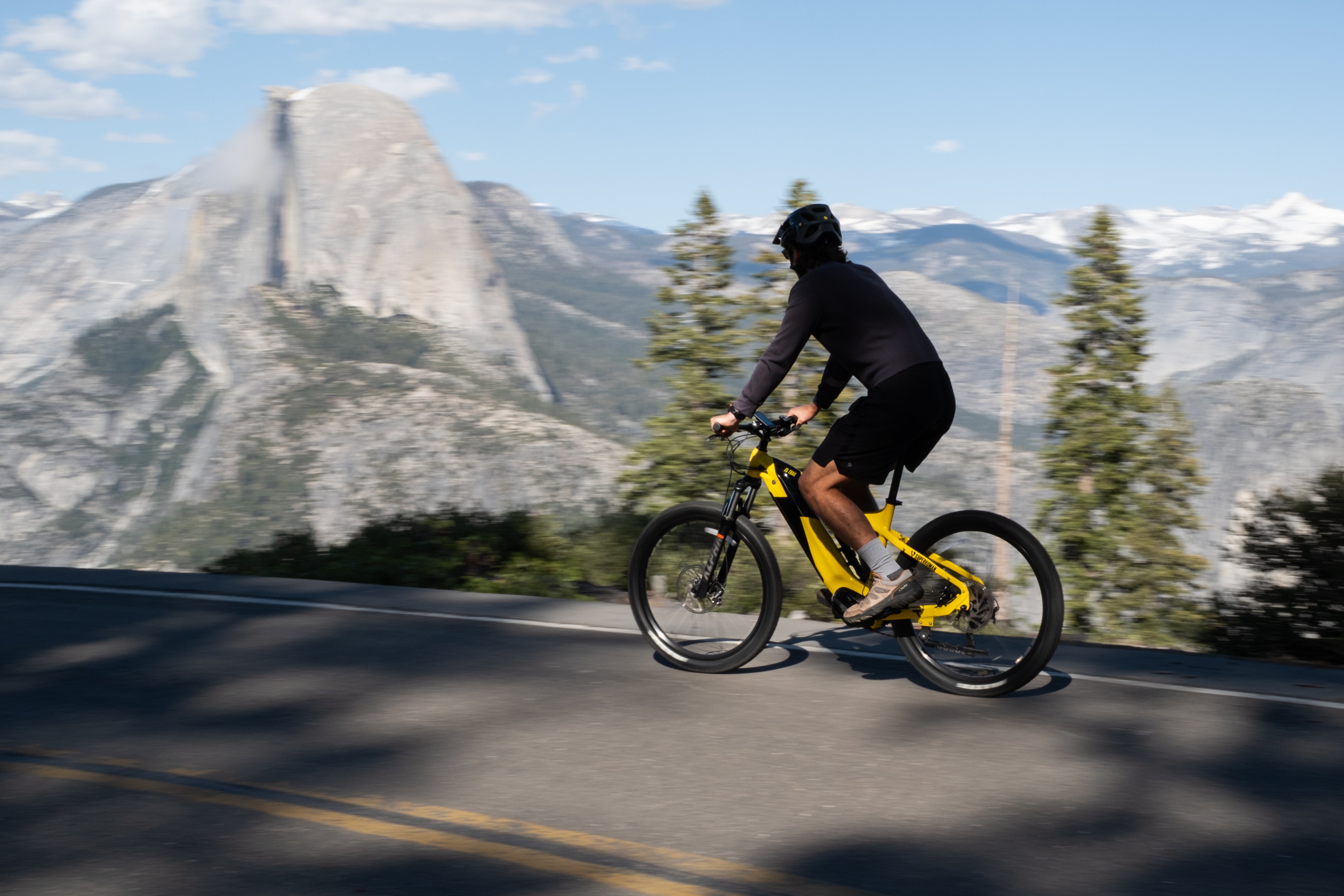
Quick answer: Yes — for most people. A quality e-bike typically pays for itself within 1–2 years compared to car commuting costs, it replaces short car trips entirely, and it's genuinely more fun to ride than a regular bike. The real question isn't if e-bikes are worth it — it's which one is worth it for your riding style, budget, and commute.
Why People Ask This Question
The hesitation is understandable. A quality e-bike costs anywhere from $1,000 to $6,000+. That's real money. And if you've never ridden one, it's hard to know whether motor assist actually changes how you use a bike — or whether it just gathers dust in the garage like that Peloton.
So let's break it down honestly: the costs, the savings, the real-world benefits, the downsides, and who an e-bike is actually right for.
How Much Does an E-Bike Save You Compared to a Car?
The American Automobile Association estimates the average cost of owning and operating a new car at roughly $12,000+ per year once you factor in payments, insurance, fuel, maintenance, and depreciation. Even if an e-bike only replaces 20% of your car trips, that adds up to real savings over a year.
Here's a realistic comparison for a commuter riding 10 miles each way:
|
Car |
E-Bike |
|
|---|---|---|
|
Purchase cost |
$30,000+ (avg. new car) |
$999–$6,000 |
|
Monthly fuel/charging |
~$150–200 |
~$2–5 |
|
Monthly insurance |
~$150 |
~$10–20 (optional) |
|
Annual maintenance |
~$800 |
~$100–200 |
|
Parking |
$0–$200/month |
$0 |
A bike like the Superhuman Babymaker II Pro ($1,499) can pay for itself in fuel savings alone in well under a year if it replaces a daily car commute — before you even count parking, wear on your car, or a gym membership you stop renewing.
What an E-Bike Actually Changes About Riding
The biggest misconception about e-bikes is that they're "cheating." In reality, they remove the main reasons most people don't ride bikes more often.
Hills stop being a barrier. Every city has them — that one climb between you and the office that rules out biking on a hot day. With pedal assist, you crest it without breaking a sweat. That's the single biggest reason people switch from traditional bikes to e-bikes for commuting.
Distance becomes manageable. A 15-mile commute on a regular bike is an athletic feat most people won't do daily. On an e-bike, it's just Tuesday. Models like the F5 Trail (50+ mile range) and the Weapon (70+ mile range) give you enough range to stop thinking about range entirely.
You still get exercise — on pedal-assist models. Studies on e-bike adoption consistently show riders log more total miles than traditional cyclists, not less, because the barrier to getting on the bike is lower. On pedal-assist Superhuman models — Babymaker, Photon, Moonrider, F5 Trail, and Weapon — you're still pedaling the whole time; the motor just means you don't have to go all-out on every hill. (This doesn't apply to throttle-driven models like the Bomber or Champ, which are built for power and fun rather than fitness.)
It's faster than you'd expect. The Photon and Babymaker II Pro both hit 25–28+ MPH. In a city like San Diego, that's genuinely competitive with driving in traffic — and you don't pay $20 to park.
Who E-Bikes Are Worth It For
E-bikes make a lot of sense if you:
-
Commute 5–20 miles each way
-
Live in a hilly city (yes, San Diego counts)
-
Want to replace some car trips without giving up convenience
-
Currently don't ride because it's too sweaty, too far, or too hilly
-
Want a lower-cost, more enjoyable alternative to sitting in traffic
E-bikes are less of a slam-dunk if you:
-
Have nowhere convenient to charge or store a bike
-
Need to carry passengers regularly (kids, etc.)
-
Live somewhere with no usable bike infrastructure
Which Superhuman E-Bike Is Worth It for Your Needs?
Not every e-bike is the same, and getting the wrong one is the fastest way to end up not using it. Here's how the full Superhuman lineup maps to real use cases.
Best for city commuting and casual rides
Babymaker II Classic — $1,000 | 250W | 20+ MPH | 40+ mile range | 33 lbs
The entry point into the Superhuman lineup. A stealth, single-speed design with a Gates belt drive that looks like a regular road bike — most people won't even clock it as electric. Lightweight at 33 lbs, with enough range for most daily commutes. If your rides are mostly flat and under 15 miles each way, this is the practical choice.
Babymaker II Pro — $1,499 | 350W | 25+ MPH | 70+ mile range | 33 lbs
A step up in motor power and range. The 70+ mile range is remarkable at this price point — this is the bike for longer commuters or riders who don't want to think about charging every night. Still 33 lbs and just as clean-looking as the Classic.
Best for versatility (road + light trail)
Photon — From $999 | 350W | 28+ MPH | 40+ mile range | 43 lbs
The fastest bike in the road lineup per dollar. Available in glow-in-the-dark colorways alongside standard finishes, and hits 28+ MPH. A strong pick for riders who want speed and a little personality.
Moonrider — $1,500 | 750W | 28+ MPH | 50+ mile range | 59 lbs
A step-through frame design makes this uniquely accessible — no swinging a leg over to mount or dismount. The mid-drive motor and 750W of power mean serious climbing strength. Popular with commuters dealing with real elevation or who want extra power in reserve.
Best for fun, all-surface cruising
Bomber — $1,800 | 750W | 28+ MPH | 40+ mile range | 88 lbs
The wildcard of the lineup. Fat tires, a retro pocket-bike look, a bench seat built for two, dual suspension, and a twist throttle make the Bomber the most fun bike here — and one of the most capable on varied terrain. It handles pavement, gravel, and sand without complaint. If your rides are more about the joy of riding than logging commute miles, or your "commute" mixes road and rougher surfaces, the Bomber earns its place. Best thought of as a powerful, comfortable cruiser rather than a pure pedal-assist commuter.
Best for trail and adventure riding
F5 Trail — From $2,499 | 750W | 28+ MPH | 50+ mile range | 61 lbs
The go-anywhere mid-drive eMTB. Hardtail geometry handles San Diego's backcountry trails as well as street commuting. If you want one bike that does it all — fire road on Saturday, the office on Monday — this is it.
Weapon — From $4,599 | 1000W | 28+ MPH | 70+ mile range | 55 lbs
For riders who want the best range and power in the trail category. A carbon fiber e-MTB with 70+ miles of range on a 1000W motor — serious capability for adventure riders who go long and descend like they're on a traditional mountain bike.
Best for performance enthusiasts
Blade 2.0 — From $5,999 | 1000W | 35+ MPH | 50+ mile range
The top of the pedal-assist Superhuman lineup. A 35+ MPH top speed puts this in a different category entirely — closest to a motorcycle in feel, but still pedal-assisted. Not for everyone, but for the rider who wants the absolute ceiling of pedal-assist performance.
Best for off-road powersports (not a commuter bike)
Champ Pro Electric Dirt Bike — From $4,699 | 13kW peak power | 55+ MPH | 50+ mile range | 164 lbs
The Champ Pro isn't a commuter e-bike — it's a full electric dirt bike built with real motocross components: inverted suspension forks, hydraulic disc brakes, and a mullet tire setup for serious off-road grip. With a 13kW peak motor and speeds north of 55 MPH, it belongs in its own category alongside dirt bikes and powersports vehicles, not next to a Babymaker or F5 Trail. Superhuman requires riders to be 16 or older, and the Champ Pro is built for off-road use only. If you want raw, throttle-driven off-road power rather than a daily pedal-assist ride, this is the one to look at — just budget for it as a powersports purchase, not a bike-share replacement.
The Honest Downsides
No fair comparison is complete without them.
They're heavier than regular bikes. Most e-bikes weigh 40–90+ lbs, and dedicated off-road models like the Champ Pro weigh significantly more. If you need to carry your bike up stairs or onto public transit, that matters. The Babymaker models (33 lbs) are lighter than average, but still heavier than a traditional road bike.
You need a place to charge. A standard home outlet is all you need — e-bike batteries typically charge in 3–6 hours — but apartment living without easy outlet access makes this harder.
Upfront cost is real. Even at $999, this is a considered purchase. The math works out over time, but you feel the cost upfront.
Theft is a concern. A quality lock and secure storage matter more when your bike is worth $1,500 or more.
Frequently Asked Questions
Is an e-bike actually worth the money? For most commuters riding 5–20 miles a day in a hilly or traffic-heavy city, yes. The fuel, parking, and maintenance savings versus car ownership typically cover the purchase cost within 1–2 years, and riders tend to use e-bikes more often than they expected to.
Do you still get exercise on an e-bike? On pedal-assist models, yes. Research on e-bike usage shows riders log more total miles than traditional cyclists because the lower physical barrier means they ride more often — they're still pedaling, just with help on hills and distance. Throttle-first models like the Bomber and Champ Pro are built for power and fun rather than fitness.
What's the difference between the Champ Pro and Superhuman's other e-bikes? The Champ Pro is an off-road electric dirt bike with motocross-grade components, a 13kW peak motor, and speeds over 55 MPH — it's a powersports vehicle, not a pedal-assist commuter bike like the Babymaker, F5 Trail, or Weapon. It requires riders to be 16+ and is intended for off-road use only.
How long does an e-bike battery last on a charge? Range varies by model and riding conditions, but the Superhuman lineup spans 40+ miles (Photon, Bomber) up to 70+ miles (Babymaker II Pro, Weapon) per charge, with most batteries fully charging in 3–6 hours.
The Bottom Line
For the vast majority of people considering one, an e-bike is worth it. The math on replacing car commutes works. The ride experience is genuinely better than expected. And San Diego's climate — 300+ sunny days a year — is about as favorable as it gets for year-round riding.
The best way to know for certain? Come test ride one at Superhuman HQ in San Diego. No commitment, no pressure — just see what it feels like to hit 28 MPH up a hill you've always dreaded.
Share:
The Glow-in-the-Dark Electric Bike That Makes Night Riding Safer (and Way Cooler)
Electric Bike Classes Explained: Class 1, 2, and 3 (2026 Guide)