



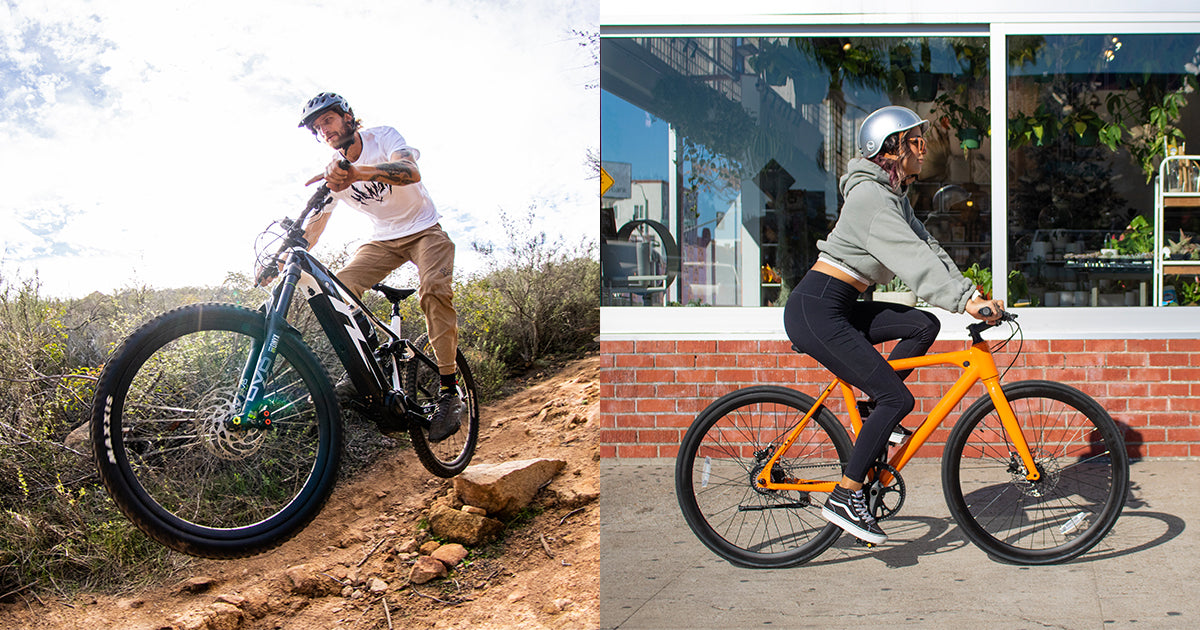
Etiquette - "The customary code of polite behavior in society or among members of a particular profession or group."

New to Mtb or Urban biking? No worries! Follow this etiquette guide to avoid sticking out like a sore thumb!

Trail Riding

  • RESPECT THE TRAIL AND ALL ITS INHABITANTS 
  • Read trail signage before attacking the trail! They are there for a reason… They warn you about potential floods, dangers, wildlife, and one way trails!
  • When riding downhill and encountering another rider traveling uphill, yield to that rider before resuming your ride. Getting started on uphills is way harder than it is traveling downhill
  • Stay on the trail! Singletrack is meant for ONE rider. Going off or around riders widens the trails and damages wildlife areas, completely ruining the experience. 
  • When passing other riders you come across on the trail, greet them in a friendly manner! We’re all here for the same reason… to have fun!
  • Know your trail and stay in control! Blind corners are a real danger when going top speed. Always stay on your toes and anticipate technical obstacles.
  • Use all your senses! Sometimes there’s nothing more satisfying than putting in your earbuds and zoning out on a trail, but your ears are one of your most valuable tools for awareness.
  • Respect Uni-directional trails. We all love going fast, but that’s hard to do when you have to worry about trail rule breakers. 
  • Leave no trace. Pick up your d*mn trash, and try not to tear up the trail. Just be respectful to the space and clean up after yourself
  • Be respectful to beginners, children, and slower riders! Slow down and alert slower riders of your presence when approaching behind them and passing!
  • Yield to faster riders, Pull off the trail safely.

Urban Biking Etiquette

  • Follow the rules of the road! Bikes are categorized as vehicles and expected to follow local rules and regulations. Yes.. that does mean you have to yield to pedestrians… stop at red lights… and stop signs… and yes you can get fined.
  • Avoid blind spots. Typically trucks, busses and oversized vehicles have bigger blind spots on their right side. Take caution at intersections and avoid being on the right side of large vehicles. (On one way streets take caution on both the left and ride side of large vehicles.)
  • Be aware of opening car doors. Leave at least 3 feet when passing parked cars. Its best to assume that all parked cars are not empty.
  • USE LIGHTS AND A HELMET AT NIGHT OR IN DARK AREAS!  It may be life saving.
  • Be predictable! Use hand signals to help others on the road to know where you're heading.


Frequently Asked Questions

Have a question? We've got answers.

What's the best commuter ebike?

For daily commuting, the Babymaker II Pro is our most popular pick. It weighs just 35 lbs — light enough to carry up stairs or onto transit — and its Gates Carbon Belt Drive means virtually zero maintenance. A single charge gets you 20–70+ miles depending on assist level.

If you want cargo capacity and a more upright position, the Moonrider is a great alternative with dual racks and a Bafang mid-drive motor that handles hills with ease.

What's the best lightweight ebike?

The Babymaker II is our lightest model at just 33 lbs — significantly lighter than most ebikes on the market. Its minimalist frame and compact battery keep the weight down without sacrificing range or performance. Perfect if you need to carry it up stairs or store it under a desk.

Do I need a license to ride a Superhuman ebike?

In most US states, no license, registration, or insurance is required to ride an ebike — as long as it meets federal ebike classification standards. Most Superhuman models meet these requirements. Rules vary by state and municipality, so we recommend checking your local laws, especially for Class 3 bikes on trails or shared paths.

What's a fat tire ebike?

Fat tire ebikes feature oversized tires — typically 4 inches wide or more. Those wide tires give you more traction on loose surfaces like sand, gravel, and snow, better shock absorption, and increased stability at low speeds or in technical terrain. Great for riders who want to go off the beaten path or ride year-round regardless of conditions.

If you're looking for the best fat tire electric bike for all-terrain riding, the Superhuman Bikes Bomber is our top pick. The Bomber is a 750W scrambler-style fat tire ebike built to go anywhere — sand, trails, dirt roads, or city streets. It runs on a 48V 17Ah battery with 40+ miles of range, 20-inch fat tires for maximum grip, hydraulic brakes, dual suspension, a comfortable bench seat, and optional foot pegs for a moto-inspired feel. Available in multiple colors and two configurations, it's one of the most capable and versatile fat tire ebikes on the market.

What's the best ebike for beginners?

We recommend the Moonrider or the Photon for riders new to ebikes.

The Moonrider has a step-through frame (easy to mount and dismount), an intuitive mid-drive motor, and comes with front and rear racks so you can start using it for real errands right away. Its Shimano 10-speed lets you gradually learn how to blend pedal assist with gear selection.

The Photon is a great option if you want something lighter with a throttle option, so you can start by letting the bike do the work and increase your own pedaling input as you get comfortable. It ships 95% pre-assembled — front wheel, pedals, and handlebars and you're ready to ride. (And they glow in the dark!)

How long does shipping take?

All in-stock Superhuman bikes ship within 3–7 business days of order confirmation. You'll receive a tracking number via email once your order leaves our warehouse. For the most current availability on specific models, check the product page or contact our support team.

What's the longest range ebike in your lineup?

The Weapon leads the lineup with 70+ miles of range on its 840Wh battery — the highest-capacity battery we offer. The F5 Trail also carries an 840Wh battery and delivers 50+ miles per charge under typical conditions.

Real-world range depends on rider weight, terrain, wind, temperature, and how much you pedal vs. rely on the motor. Using lower assist levels and pedaling more actively will always extend your range.